Begin with the reading task
A person may arrive to skim an argument, locate a reference or spend time with a long essay. Each task asks something different of the page. We begin with that use before choosing a typographic gesture.
A small system can carry complex content
Hierarchy, measure, spacing and repetition form a vocabulary. Used consistently, they help a reader recognise relationships without having to decode every page from the beginning.
The guide pairs these principles with production questions: how a caption survives printing, how a margin changes at the binding, and how a sequence feels when it becomes an object.
Practice through comparison
Set the same material in two ways and explain the difference. Print a proof at its intended size. Ask another reader to find something specific. These modest habits make editorial judgement easier to discuss and improve.
The visual examples
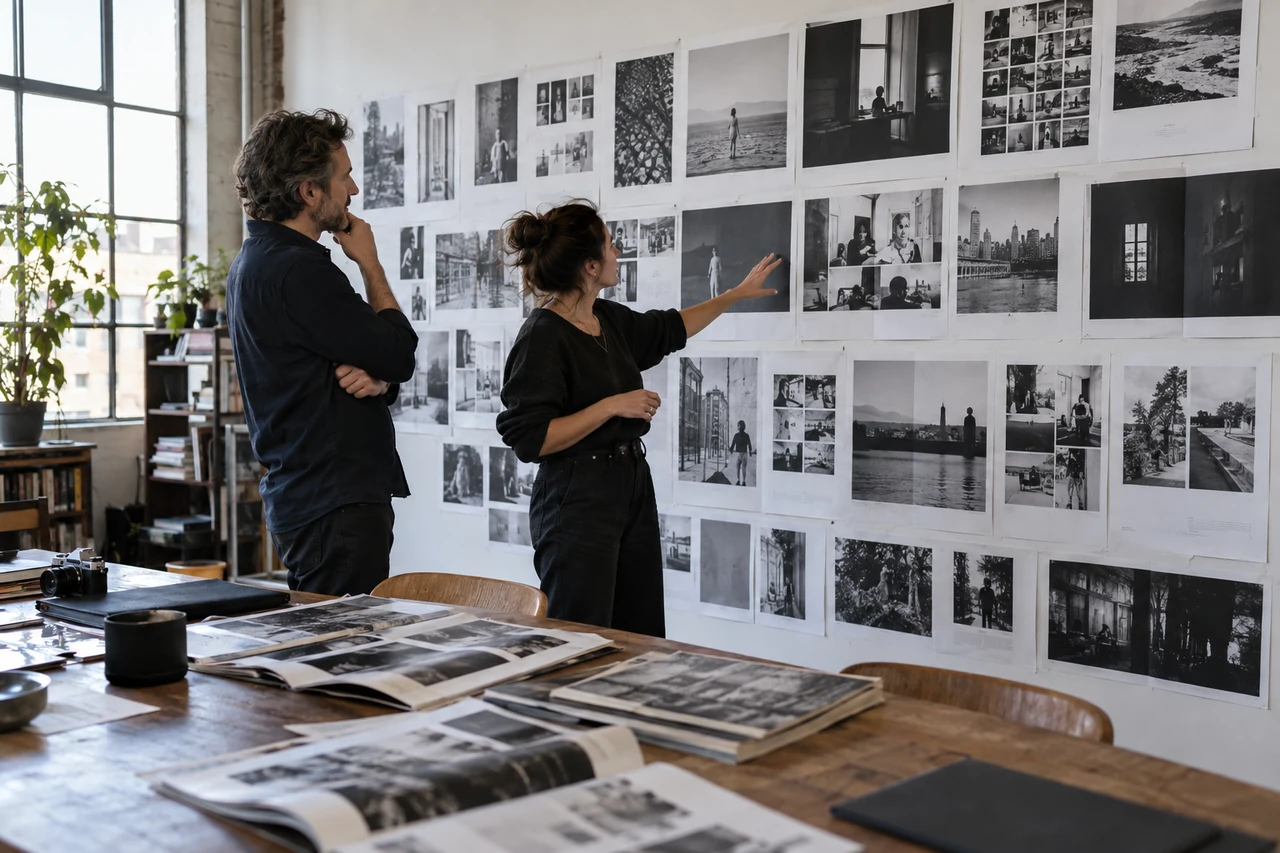
AI-created photographs illustrate the editorial workspaces and publication objects on this site. They are original teaching visuals, not a portfolio of client commissions or an offer to supply the pictured books.